



Build efficient, resilient, and scalable operating models that deliver consistent business performance.
Designed for COOs, Operations Leaders, and Transformation Heads responsible for execution excellence.
End‑to‑end processes are siloed across functions, leading to inefficiencies and delays.
Manual workarounds, rework, and duplication continue to inflate operational costs.
Performance varies across teams and locations, reducing predictability.
Leaders lack real‑time insight into operational performance and bottlenecks.
Cost‑cutting initiatives that do not address root‑cause performance issues.
Technology implementations without process and operating model change.
Lack of ownership, governance, and sustained execution discipline.
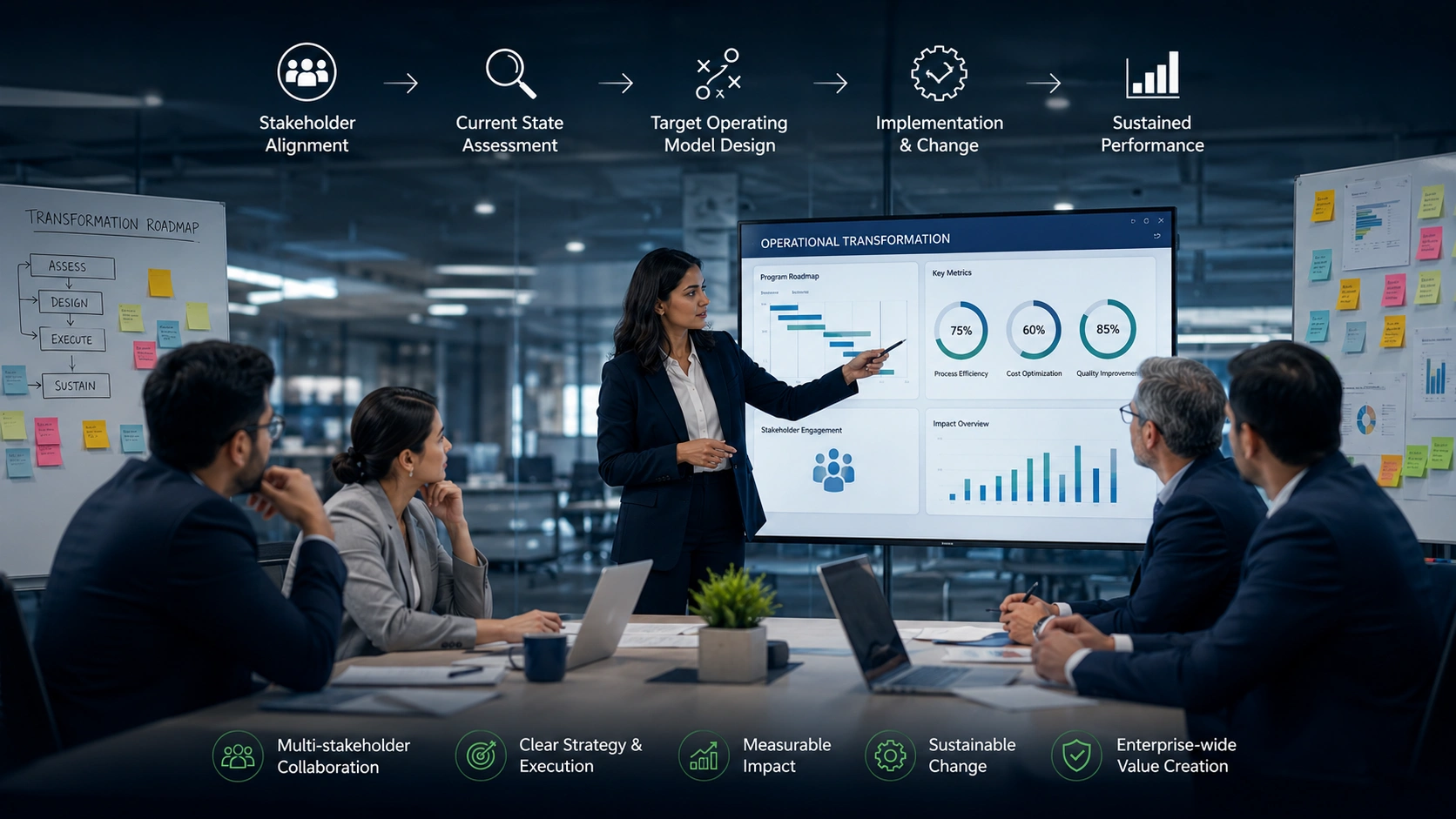
Assess end‑to‑end processes, cost drivers, performance gaps, and capabilities.
Define a target operating model aligned to business priorities and growth plans.
Redesign processes, embed governance, and enable execution through people and tools.
Establish metrics, performance management, and continuous improvement mechanisms.
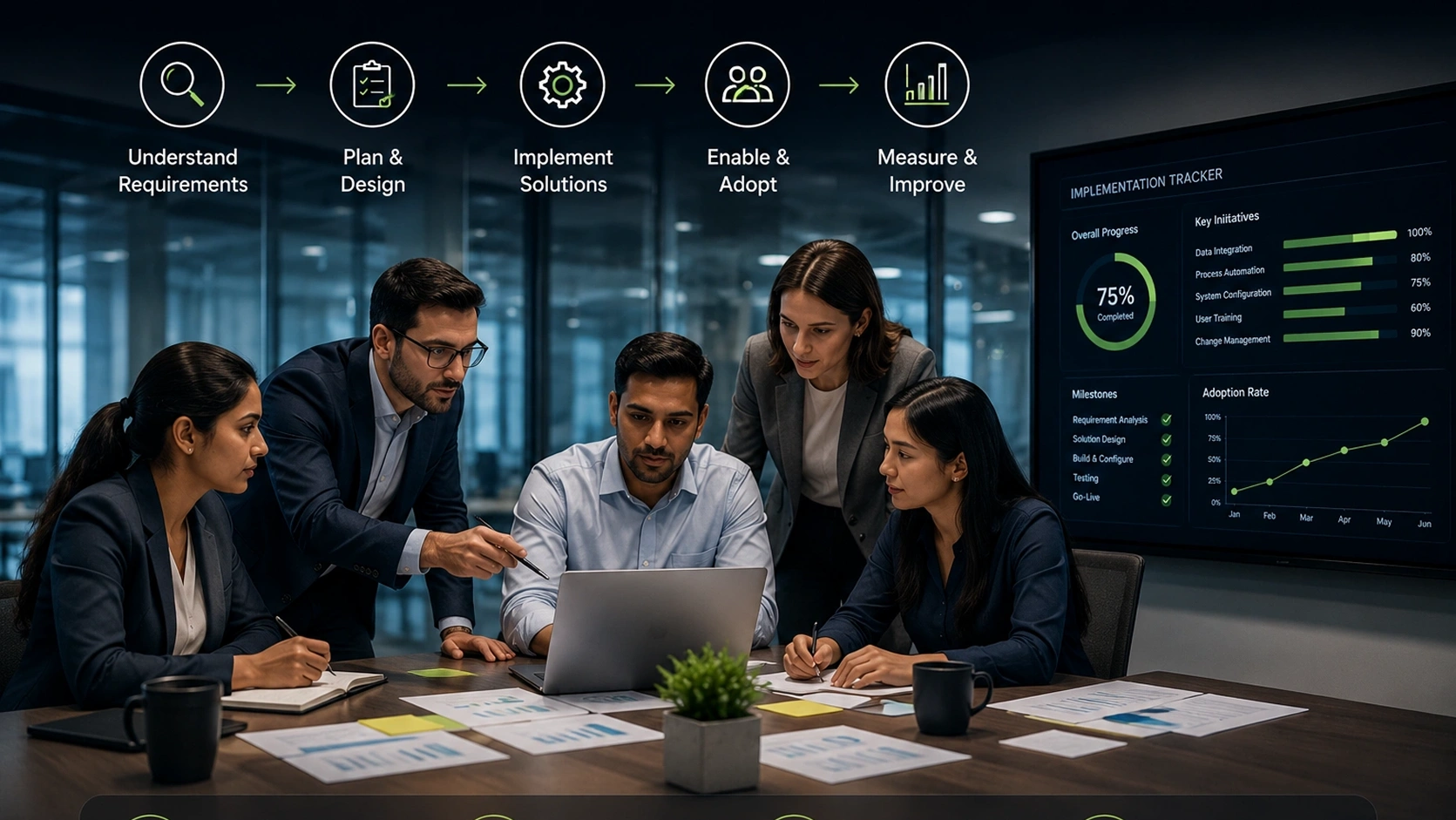
We convert target operating models into executable workflows, governance cadences, and role-level accountability for each function.
We define operating responsibilities, decision rights, and service boundaries aligned to strategy.
We remove bottlenecks and rework points that slow delivery and raise operating costs.
We implement KPI structures tied to outcomes at team, function, and leadership levels.
We prioritize automations that reduce manual load in high-volume process steps.
We establish cadence, accountability, and escalation mechanisms to sustain execution discipline.
We equip teams with practical adoption support to lock in behavioral change.
Improvements are tracked through cycle-time, throughput, rework, and service-level metrics to demonstrate sustained operational gains.
Typical impact: 15-30% cycle-time reduction and 10-25% productivity improvement in targeted functions after process redesign and adoption.
Cost-to-serve declines as processes become simpler, faster, and less error-prone.
Core workflows complete faster with clearer handoffs and fewer approval bottlenecks.
Standardized operating routines improve cross-team reliability and planning confidence.
Gains are sustained through governance and KPI discipline, not one-time program activity.
KWDT pairs transformation design with implementation leadership, helping teams adopt new ways of working without losing delivery momentum.
We have delivered improvement programs in complex, multi-stakeholder enterprises.
We stay accountable through implementation and adoption, not just design recommendations.
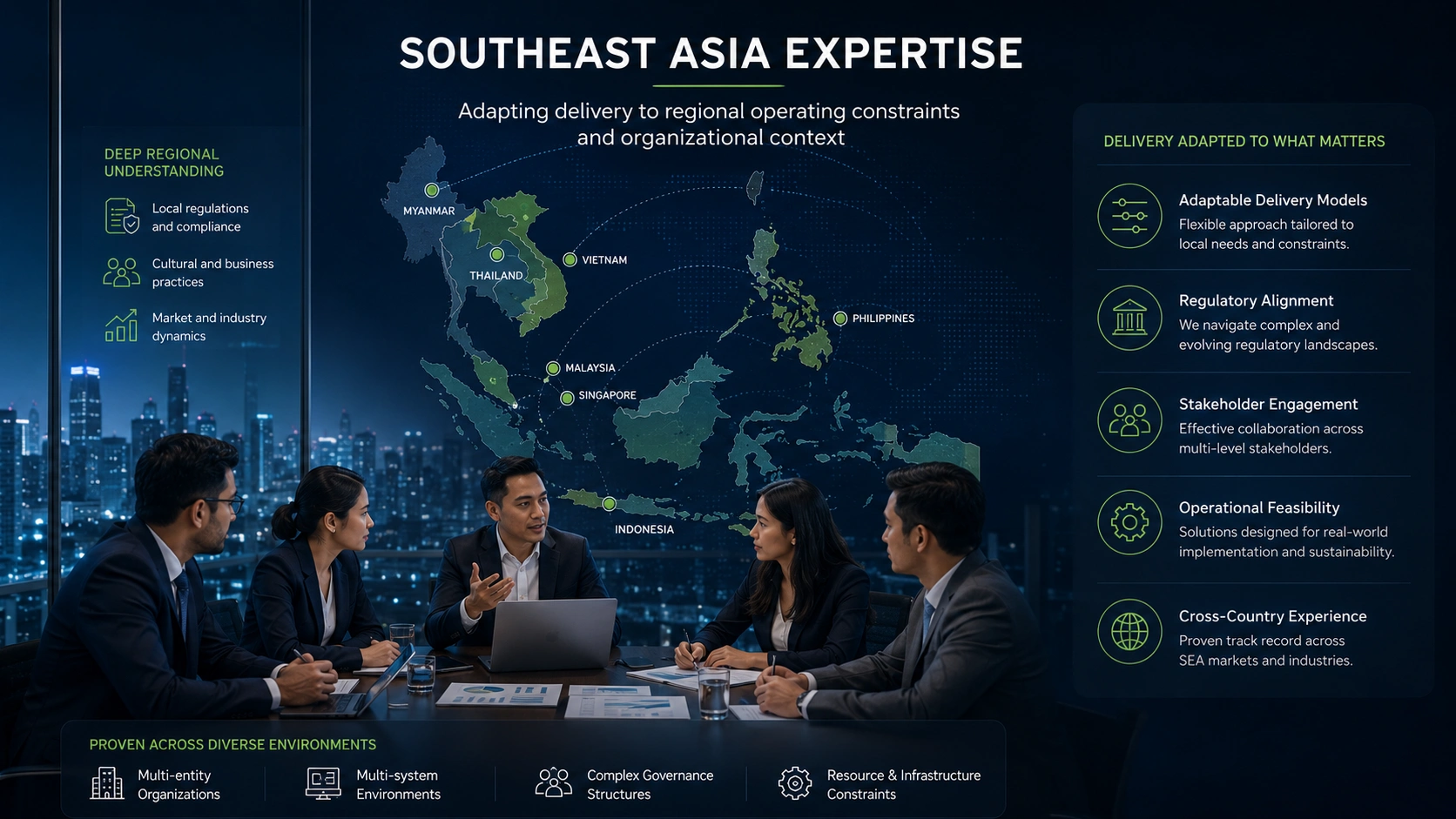
We adapt delivery to regional operating constraints and organizational context.